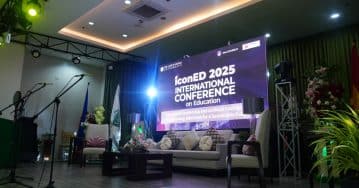
Our Lady of Fatima University (OLFU) officially launched OLFU AI-Ready Education on 25 August 2026 at the Assembly Hall of the RISE Tower, marking the beginning of a human-centered initiative designed to prepare learners for an increasingly AI-driven world while strengthening the human expertise, ethical judgment, and professional competencies that remain essential in education and the workplace.

Bringing together leaders from academe, government, and industry, the launch marked the beginning of a strategic movement to integrate artificial intelligence, data literacy, ethical reasoning, and authentic industry practice into education.
Pioneered by the College of Business and Accountancy (CBA) and the College of Hospitality and Institutional Management (CHIM) under the leadership of Dean Dr. Ignacio C. Cordova Jr., the initiative is anchored on a central premise: as technology continues to evolve, education must evolve with it while keeping sight of what makes learning and professional practice distinctly human.
For OLFU Vice President for Academic Affairs Dr. Heracleo D. Lagrada, the launch represents a significant step in ensuring that the University remains responsive to the changing demands of society and the professional world.
“Artificial intelligence is no longer a distant concept. It is already reshaping how we live, how we work, and how we learn,” Lagrada said.
He emphasized that AI adoption in education should not be approached simply as a technological shift, but as a progression that requires educators and institutions to move from fear and uncertainty toward understanding, responsible adoption, and ultimately reinvention.

While fear is an understandable response to disruptive technology, he stressed that it must be addressed through active involvement, training, and understanding. He likewise cautioned against allowing AI to become a shortcut that weakens creativity, reasoning, and critical thinking.
“The shortcut can bypass the very process through which learning happens,” he said, underscoring the importance of protecting the foundational skills that education is meant to develop.
For OLFU, the goal is not merely to reach acceptance of AI, but to move toward reinvention, reimagining what teaching and learning can become through responsible and purposeful use of intelligent technologies.
“The question, therefore, is no longer whether AI will reshape education. It already is,” Lagrada said. “The real question is whether we will allow fear and hesitation to hold us back, settle for mere acceptance, or move forward with imagination and purpose to reinvent teaching and learning.”
From Prohibition to Preparation
Dr. Cordova highlighted that the initiative is the product of three years of deliberate work.
The launch begins with 58 of AI-integrated courses, covering 10 percent of the curriculum across the academic programs, informed by consultations with industry partners in banking, hospitality, tourism, health-related sectors, and other professional fields.
He described OLFU’s journey as a deliberate shift “from prohibition to preparation.”
While teaching students how to write effective prompts was once an important lesson, Cordova argued that the rapidly changing AI landscape now requires a broader set of competencies.
“A chatbot predicts the next word,” he said. “But the world has already moved forward.”
Cordova pointed to the emergence of agentic AI, which can determine subsequent actions, initiate workflows, retrieve information, perform tasks, and make recommendations within defined parameters.

This evolution, he explained, changes what students need to learn.
Rather than simply interacting with AI or using generative tools, students must learn to work with, supervise, evaluate, and govern AI systems.
“A chatbot-ready graduate was yesterday’s product,” Cordova said. “An agentic-AI-ready graduate, one who can supervise intelligent systems, exercise judgment, and make responsible decisions, is part of tomorrow’s employability landscape.”
The initiative is therefore designed not simply to introduce new technologies into classrooms, but to prepare students for the realities of workplaces increasingly shaped by intelligent systems.
Building a Governance Framework
The launch also formalized OLFU’s move toward a structured approach to AI adoption through the OLFU Three-Layer AI Governance Framework.
Cordova shared that 57 percent of academic leaders provided insights into the University’s AI direction, while 79 percent identified the need for a University-wide framework and 87% said clinical and professional programs must be safeguarded.
“And we listened,” Cordova said.
The CBA and CHIM are taking the lead in implementing the framework, with the goal of eventually extending it across OLFU.
Central to this approach is the University’s position that AI should be understood and responsibly used rather than simply restricted.
“At OLFU, we do not police AI. We teach our students what they are using,” Cordova said.
The two colleges have established an approved AI tools registry and have examined more than 58 generative and agentic AI tools for appropriate use within the curriculum.
For CHIM, selected tools support applications such as guest experience simulation, menu and nutrition modeling, tourism planning, and operational decision support.
For CBA, selected tools support audit and traceability, decision support, marketing, banking, and social entrepreneurship.
These applications reflect the initiative’s emphasis on connecting AI education with authentic professional practice.
Keeping the Human at the Center
Despite the increasing capabilities of AI, Cordova emphasized that technological advancement makes human qualities more, not less, important.
“When creation tools become widely available, what becomes scarce is the human part: the story, the perspective, the discipline, the voice, and the meaning,” he said.
AI may be capable of producing images, summaries, scripts, and presentations, but the ability to give these outputs meaning remains fundamentally human, he explained.
He identified vision, values, wisdom, story, and character as qualities that must continue to guide education in an AI-enabled environment.
“Knowledge without conscience is not education. It is simply power,” Cordova said.
This principle ultimately defines the purpose of OLFU AI-Ready Education: not simply to make graduates faster or more efficient, but to prepare them to lead and direct intelligent technologies with judgment, standards, and character.
From Policy to Implementation
University President Dr. Caroline Marian S. Enriquez likewise emphasized that AI readiness must be approached as an institutional transformation rather than a one-time technological initiative.
Enriquez acknowledged the uncertainty surrounding AI while expressing her full support for the framework.
“Yes, I am afraid. Yes, we do not know exactly what the future will hold for our students, our employees, and the workforce. But yes, I fully support this framework, because this is the direction in which education is moving, and we must be ready.”
She traced OLFU’s progression from policy to curriculum, training, and now implementation.
The University’s initial AI policies focused largely on restrictions and what should not be done. As its understanding of AI evolved, however, the approach likewise evolved toward embracing AI in its various forms and implications.

The next realization was that curriculum transformation could not happen without preparing the people responsible for implementing it.
Thus, training became a crucial component, not only for faculty and academic leaders, but also for staff and other members of the University community.
“AI readiness is not simply a technological initiative. It is a culture of change,” Enriquez said.
She stressed that the launch is not the conclusion of the process, but part of an ongoing effort that the University must continuously develop and improve.
Enriquez also emphasized that trust in AI must come from understanding.
“We build trust through understanding,” she said, noting the importance of learning how AI works, training people to use it properly, establishing safeguards, and understanding its limitations.
Ultimately, she reaffirmed OLFU’s commitment to an educational environment that is both human-centered and AI-enabled.
CHED Recognizes OLFU’s Initiative
The initiative also received support from Atty. Marco Cicero F. Domingo, CESE, CHED-NCR Regional Director, who recalled that AI and its implications for education were already among the topics discussed during his earlier visit to OLFU.
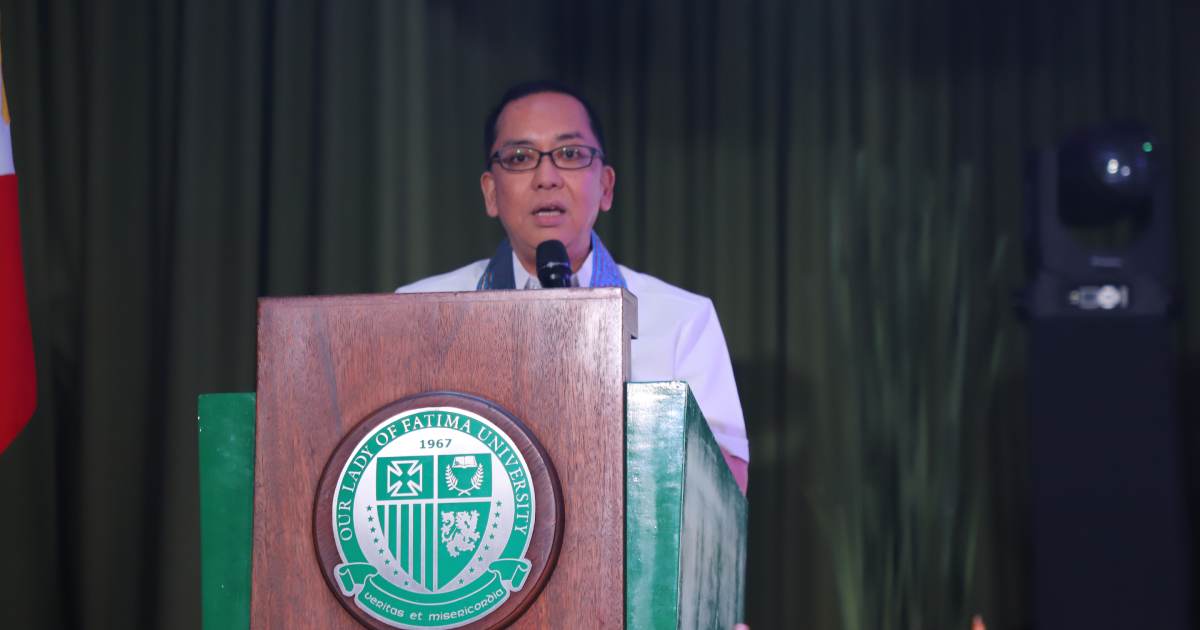
He noted that CHED has been working toward revising policies and standards to account for AI and its implications for higher education.
For Domingo, institutional initiatives such as OLFU AI-Ready Education demonstrate higher education institutions taking ownership of transformation.
“When institutions like OLFU take the initiative to lead, innovate, experiment, and prepare for the future, we see an institution taking ownership of transformation,” he said.
He emphasized that OLFU is not simply adopting AI because it is a global trend, but is deliberately preparing its faculty, students, and institution for a changing educational landscape.
At the same time, he underscored the responsibility that accompanies innovation.
As AI becomes increasingly integrated into education, institutions must continue to protect academic integrity, uphold ethical standards, safeguard students and educators, and ensure that technology remains a tool for improving education, not a replacement for the human connection at its heart.
Domingo likewise highlighted Cordova’s distinction between policing AI and working with it.
You do not police AI, but you actually work with it,” he said.
He congratulated OLFU for taking the initiative and encouraged the University to continue leading and innovating in Philippine higher education.
“Continue to show that Philippine higher education can be ready not only to respond to the future, but to help create it,” Domingo said.
Strengthening Academe-Industry Collaboration
A major highlight of the launch was the signing of a Memorandum of Agreement between OLFU and StackTrek Enterprise.
The collaboration strengthens OLFU’s commitment to developing digital competencies, AI skills, and technological proficiency across its academic community while creating stronger connections among higher education, industry-based learning, and nationally aligned skills development.

Representing their respective institutions during the signing were StackTrek Head of People and Marketing Imee Marielle Albano and OLFU University President Dr. Caroline Marian S. Enriquez.
The launch also featured a symbolic digital handprint activation, joined by CHED-NCR Regional Director Domingo, signifying a shared commitment with government toward the implementation of the educational framework.
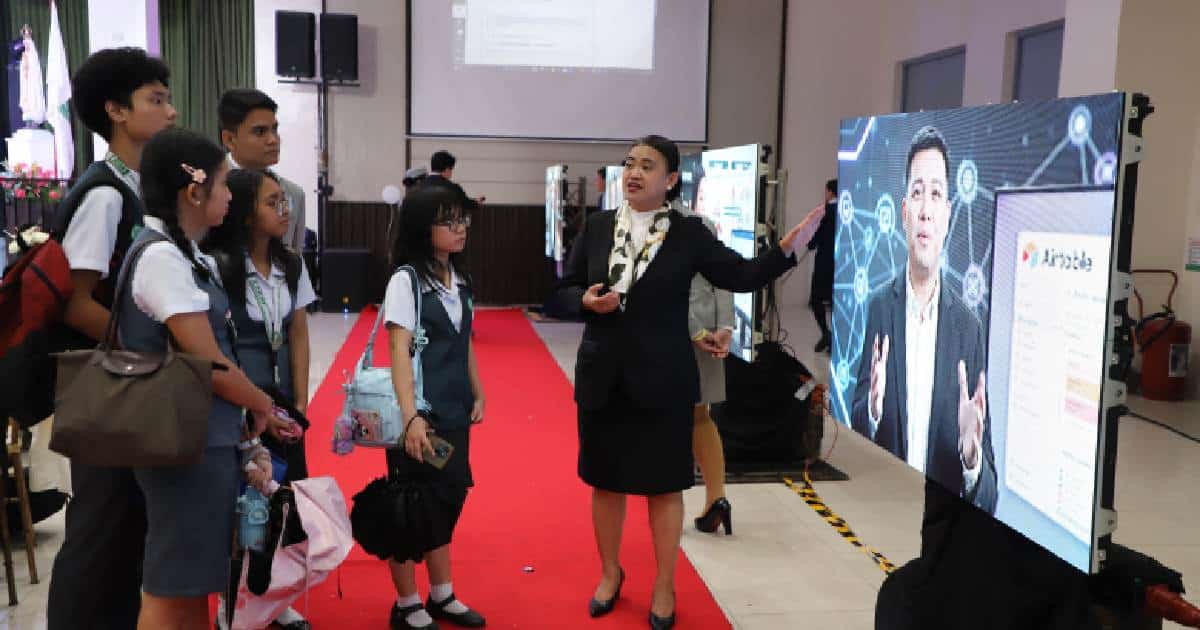
A gallery walk further showcased interactive panels presenting the framework, with OLFU leadership led by President Enriquez, Campus Administrators, Program Heads, Coordinators, and Faculty Members among those who witnessed the presentation.
The afternoon session featured the Academe-Industry Linkages and Pathways (AILP) Insight Panel on AI Integration and Innovation, led by Janette Toral, Site Owner of DigitalFilipino.com, E-Commerce Author, AI and Digital Economy Advisor, and Market Intelligence and Leadership Development Advocate.
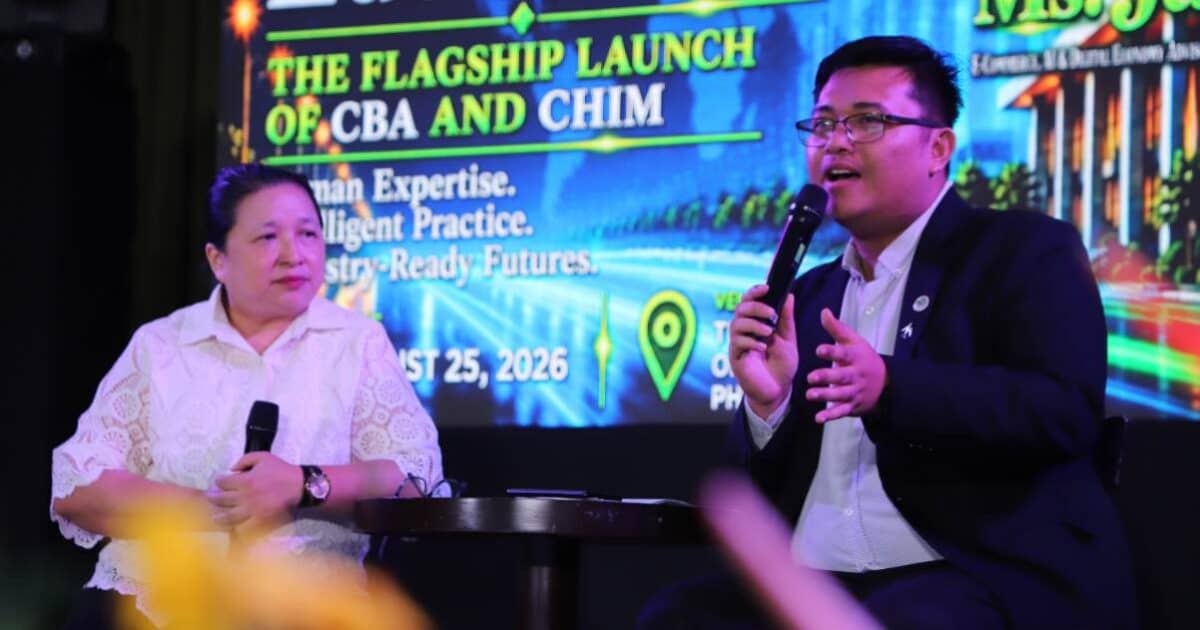
The session also underscored the importance of OLFU’s continuing collaboration with industry and professional partners in developing the University’s AI-ready education framework.
Among those present were Engr. Augusto Soliman, Executive Vice President and CEO of Hytec Power Inc. and CBA AILP Adboard Member for Technology; Joseph Albet Buddahim, Co-Founder of Katapult Digital and CBA AILP Adboard Member for Digital Marketing; Yloissa Amene of the Human Resources Department of Rajah Travel Corporation and ZIP Travel Philippines First Place, Inc.; and Garry Tenchavez, Learning and Development Manager of Savoy Hotel Manila.
Their presence reflected their full support for and partnership with OLFU, building on their role as AILP advisers whose industry perspectives and insights helped shape the framework.
Preparing Graduates for What Comes Next
With AI becoming part of education and professional practice, OLFU is preparing students to use, evaluate, supervise, and work responsibly with intelligent technologies while strengthening the human qualities that technology cannot replace.

For OLFU, AI readiness means building graduates who are technically capable, critically minded, ethically grounded, and prepared to lead in a changing world. Ultimately, the goal is not simply to prepare students for AI, but to prepare them to use AI with purpose, judgment, and humanity.
Story by Raymond Lumagsao